



I remember the pitch. You probably do too, if you were anywhere near e-commerce between 2012 and 2019. Cut out the middleman. Own the customer relationship. Capture all that margin that used to go to retailers. Build a billion-dollar brand with a Shopify store and a Facebook ads account.
It was intoxicating. It was, for a while, even true.
Warby Parker sold glasses for $95 that would have cost $400 at LensCrafters. Dollar Shave Club mailed razors to your door for a fraction of Gillette’s price. Casper shipped a mattress in a box and made buying a bed feel like joining a movement. The venture money poured in. The growth curves went vertical. The narrative wrote itself: retail is dead, DTC is the future, and the incumbents are too slow to catch up.
Here’s what nobody talked about at the time: the whole thing was arbitrage. Not a business model revolution. A pricing inefficiency in digital advertising that happened to coincide with smartphone adoption and a generation’s willingness to buy things they’d never touched.
Facebook ads in 2014 were practically free. Instagram was a wide-open field. Google was underpriced. If you had a decent product, a clever creative, and the nerve to spend, you could acquire customers for a fraction of what the legacy brands were paying through traditional channels. The margin you “captured” by cutting out retail? Most of it went straight to Zuckerberg. You just didn’t notice because the math still worked.
The math doesn’t work anymore.
Customer acquisition costs have risen 25 to 60 percent depending on who you ask and which channel you’re measuring. Meta’s average price per ad is up 9% year over year, and that’s on top of years of compounding increases. The brands I talk to — the ones in that $10 to $50 million revenue range, the ones that were supposed to be the success stories — are grinding out 7 to 8 percent EBITDA margins. Some are losing money. A lot are losing money.
The arbitrage closed. What’s left is the actual business. And it turns out, for a lot of these brands, there isn’t one.
Look at the poster children. Warby Parker, the company that was supposed to prove DTC could scale, now makes two-thirds of its revenue from physical retail stores. Not e-commerce. Stores. More than 200 of them, plus shop-in-shops inside Target. The “cut out the middleman” brand went and found a middleman.
Glossier, the darling of the beauty DTC movement, spent years insisting it would never do wholesale. Then it did wholesale. Sephora. Nordstrom. The company that built its identity on owning the customer relationship handed those customers over to retailers because that’s where the growth was.
Allbirds went public at a $4 billion valuation and is now worth a fraction of that. Casper limped into a take-private deal worth a fraction of it’s IPO price. The list goes on. These aren’t failures of execution. They’re failures of premise.
The premise was that DTC was a permanently better way to sell things. That digital advertising would stay cheap. That owning the customer relationship would translate into sustainable unit economics. That you could build a durable business on rented platforms.
None of that was true. It was a moment. A window. And while everyone was celebrating the view, the window was closing.
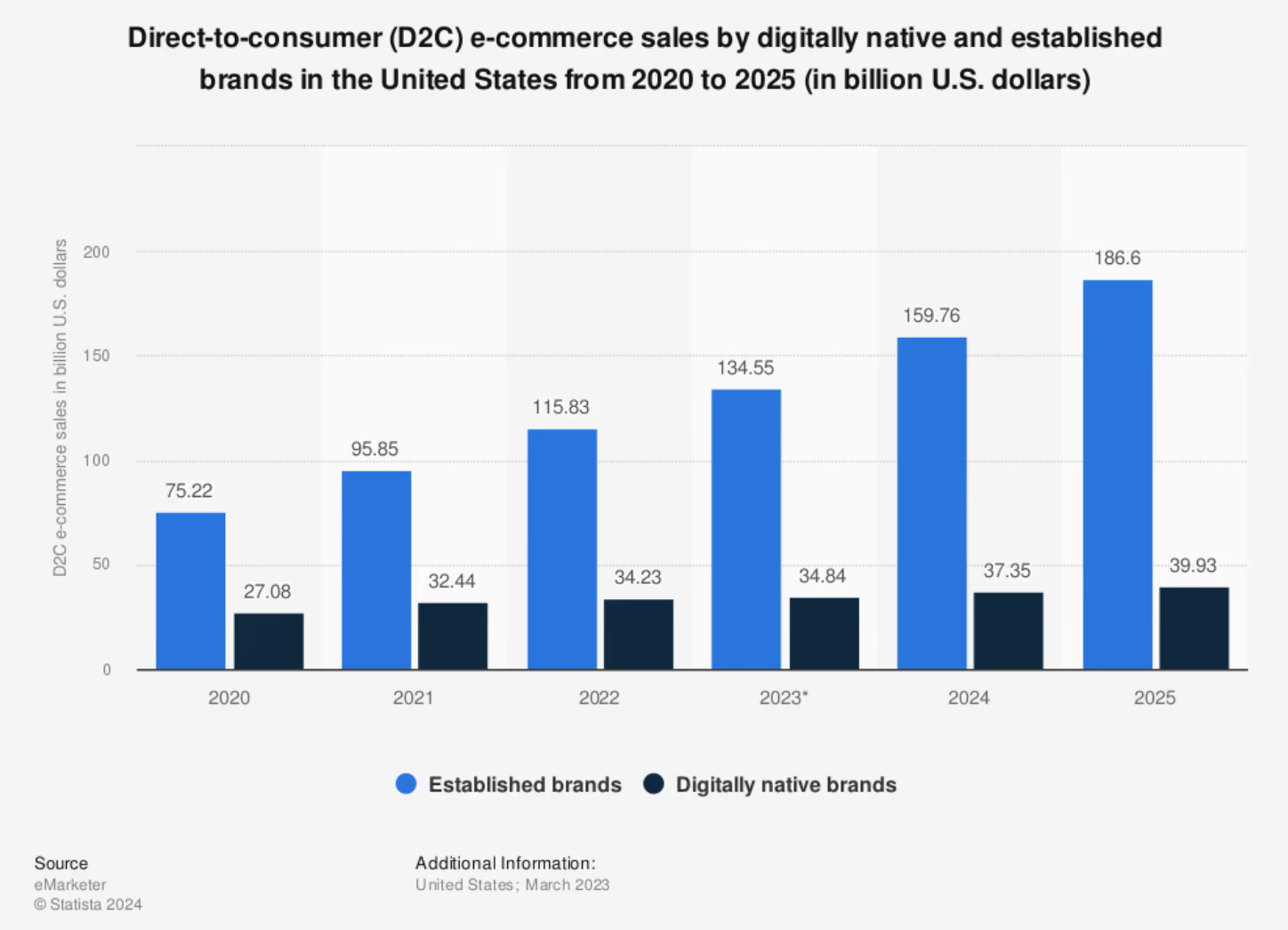
Here’s the part that’s hard to say out loud: the middlemen weren’t just taking margin. They were providing value. Distribution. Discovery. Trust. The boring, expensive work of getting products in front of people who might actually want them. When you “cut out” the retailer, you didn’t eliminate that work. You just shifted it to Facebook and Google. And Facebook and Google turned out to be much more expensive middlemen than Nordstrom ever was.
The brands that survived — the ones that are actually building toward something durable — figured this out. They stopped treating DTC as an identity and started treating it as a channel. One channel among many. They opened stores. They went wholesale. They diversified into Amazon, into TikTok Shop, into partnerships they would have sneered at five years ago. They accepted that the dream of owning the entire customer relationship was exactly that: a dream.
The phrase I keep hearing is “channel agnostic.” It’s a bloodless way of saying: we’ll sell wherever people want to buy. We’ll meet customers where they are, even if that’s a Target aisle or a Sephora counter or an Amazon search result. The purity of DTC — the direct line from brand to consumer, unmediated, uncompromised — was always more ideology than strategy.
I’m not saying the DTC model was worthless. It wasn’t. It taught a generation of brands how to think about customer data, how to build direct relationships, how to move fast. Those skills translate. But the specific arbitrage — cheap ads, high margins, explosive growth — that’s over. If your business plan still depends on it, you’re already behind.
The question now is what comes next. And the honest answer is: harder. More expensive. More complicated. The brands that win in 2026 and beyond will be the ones that can operate across channels without losing their identity. That can balance wholesale margins with DTC margins. That can build real differentiation — product, experience, trust — instead of relying on ad efficiency to paper over commodity offerings.
It’s less romantic than the DTC origin story. Less venture-backable. Less likely to produce a billion-dollar outcome in three years. But it might actually be a business.
The arbitrage is over. The work is just beginning.
*This article was originally published on rebeccaraebarton.com
