


*This article was originally published on rebeccaraebarton.com
Most DTC brands don’t have a traffic problem. They have a product problem.
Your product isn’t good enough, and more ads won’t fix it.
Harsh? Maybe. True? Absolutely.
I’ve had this conversation more times than I can count. A founder reaches out, convinced they just need more eyeballs — a bigger ad budget, a flashier campaign, a viral moment. And sometimes that’s true. But more often, when I start digging into the numbers, I find something else entirely: a product that isn’t earning the love it needs to sustain real growth.
You cannot performance-market your way out of a mediocre product or a fractured customer experience. I’ve seen it over and over again working with more than twenty brands. The ones we scaled profitably had one thing in common: their customers couldn’t stop talking about them.
Not because of genius marketing, though that certainly helped. Because the product actually delivered on the promise marketing sold.
The Four Things I Look At Before I Touch an Ad Budget
When I’m evaluating whether a brand is ready to scale, I’m not starting with their creative assets or their CPMs. I’m looking at signals that tell me whether the product itself is doing its job.
Organic repeat purchase rate. Not the repeat rate you get after hammering people with discount codes and win-back emails — the one that happens without incentives. Are people coming back because they genuinely want more?
Volume of unsolicited UGC. Are customers posting about you without being asked? Not because you ran a hashtag campaign or offered a discount for reviews, but because they felt compelled to share?
Themes in customer support tickets. What are people actually saying when they reach out? Support tickets are one of the most underutilized sources of product insight. The patterns there will tell you exactly where you’re falling short.
Return and refund rates by reason code. Not just the overall percentage, but why people are sending things back. “Not as expected” is a very different problem than “didn’t fit,” and both tell you something critical about the gap between your marketing and your product reality.
If those numbers are weak, I don’t touch the ad budget. Instead, I focus on fixing the product, the positioning — or both.
Marketing Can Open the Door. It Can’t Make People Stay.
There’s a fundamental truth that gets lost in the noise of growth tactics and funnel optimization: marketing can bring people to your product. It cannot make them love something that’s just... mid.
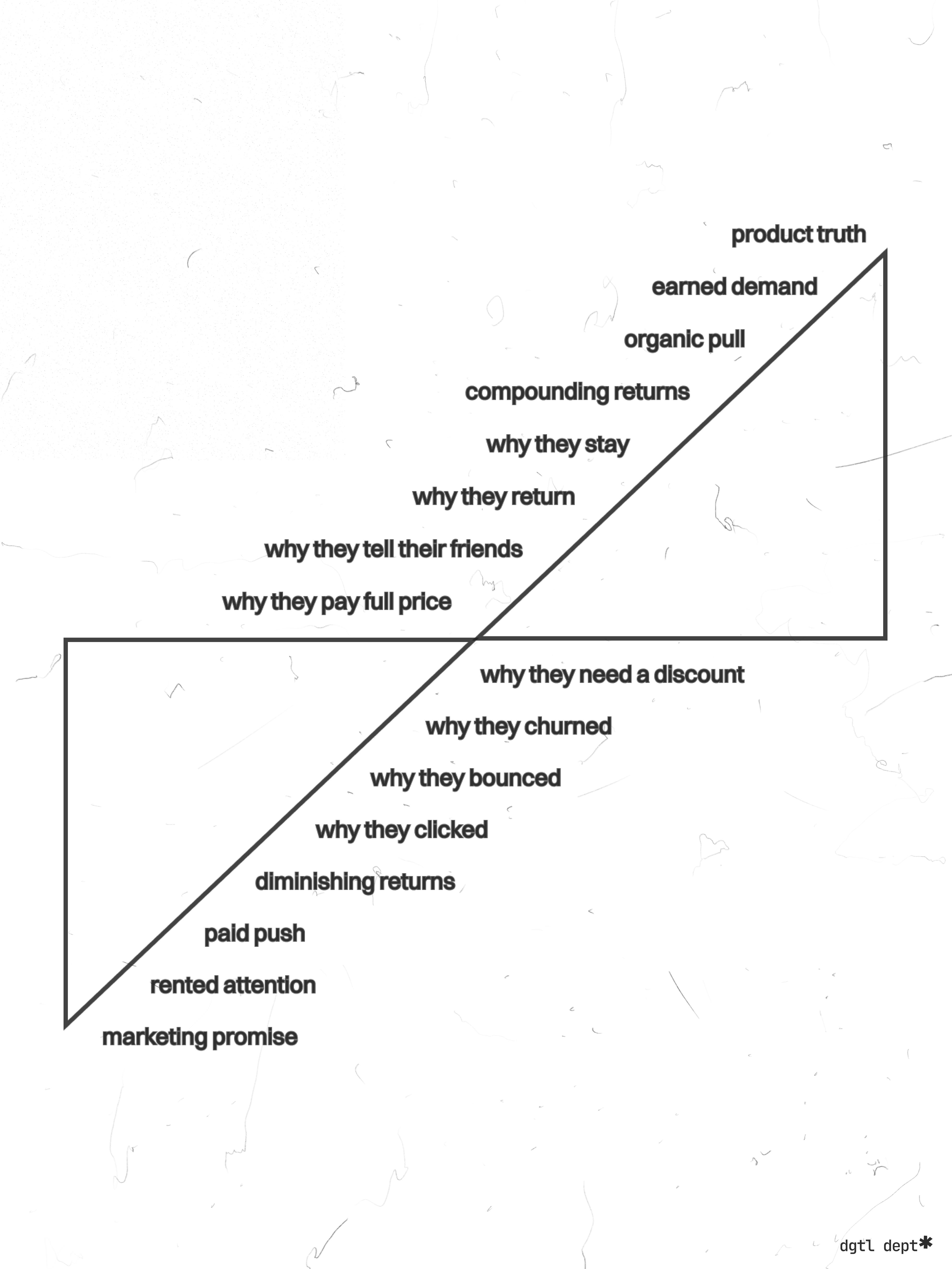
When your product is remarkable — when it genuinely solves a problem or delivers an experience that exceeds expectations — marketing becomes amplification. You’re pouring fuel on a fire that’s already burning. You’re paying to acquire customers who churn, who don’t come back, who certainly don’t tell their friends. You’re renting attention instead of building a brand.
The traffic was never the problem. The product was. Fix that first, and the marketing starts working on its own
